Twitter Thread: bit.ly/CovidMath
Why do y'all make ME do the #Math all the time? I'm so f'n #TiredOfBeingRight.
Why we SHOULD take precautions against #CoVid19 #Coronavirus and how is it NOT LIKE the yearly flu numbers - A Thread:
First, "The Flu":
Best numbers available are 2016-2017. More recent numbers are still in the 'estimate' category, so we'll use the '16-'17 numbers as baseline and reference more recent data as estimates only.
All data is US only, unless noted otherwise.
[All text in brackets are later edits.]
2016-2017 Flu data:
Symptomatic (assumed) - 29,220,523
Medical visits (confirmed) - 13,633,446
Hospitalizations - 496,912
Deaths - 38,230
https://www.cdc.gov/flu/about/burden/past-seasons.html
https://www.cdc.gov/flu/about/burden/2016-2017.html
Population estimate 2016 - 318 million
9% of the population was symptomatic
4% were confirmed medical visits
[0.15%] hospitalized
Of confirmed cases, mortality rate is 0.28%.
Of assumed cases, mortality rate is 0.13%
Second, "H1N1 2009 swine flu" (US only):
Assumed cases: 60.8 million cases
Medical visits [(confirmed)]: Unknown (like Covid19, testing data is incomplete)
Hospitalizations: 274,304
Deaths: 12,469
https://www.cdc.gov/flu/pandemic-resources/2009-h1n1-pandemic.html
Population estimate 2009 - 308 million
20% of the population was symptomatic
0.09% hospitalized
Of assumed cases, mortality rate is 0.021%.
If we assume, like seasonal flu, confirmed mortality is 2X's assumed, the baseline H1N1 "confirmed" mortality would be about 0.04%.
We can already see that H1N1 wasn't that bad compared to seasonal flu. Or was it?
To understand this, you have to understand how many strains of flu virus are out there, in "the wild" if you will. There are four basic types: A, B, C, D.
https://www.cdc.gov/flu/about/viruses/types.htm
Types A & B are your typical human flu viruses. Type C can sometimes cause mild symptoms. Type D mainly affects cattle.
Type A is split into 2 subtypes: H & N. There are 18 H types and 11 N types. Of these combinations, only 131 subtypes have been detected in nature thus far.
These 131 subtypes can be further broken down into 'groups' and 'subgroups'. But for sake of discussion, we will only focus on Type A's 131 subtypes.
Type B is split into 2 lineages: Y & V. These also can be divided by group and subgroup.
Since Type D affects cattle, we will disregard it.
Since Type C is often mild, we will disregard it.
Since Type B is rarely known to cause pandemic, even though severe, we will disregard it.
So, of the 38,230 "flu" deaths, these are attributable to those 131 strains of Type A.
So when you consider that H1N1 was "only" 32% as deadly as the seasonal flu, what you're really saying is that ONE virus is 32% as deadly as [all] 131 viruses [combined].
Or, more accurately, H1N1 (12,469 deaths) is 42X's more deadly than a single seasonal flu virus (292 deaths per virus).
Finally, what we know of the Coronavirus so far:
Symptomatic (assumed) - unknown (incomplete data)
Medical visits (confirmed) - 558,599 (as of 4/12/2020)
Hospitalizations - 93,631
Deaths - 22,154
Again, we will assume some things. One, these numbers are accurate (something we'll discuss later). And two, that symptomatic cases are roughly 2X's the confirmed cases. Each of these assumptions will be vetted later.
Population estimate 2020 - 318 million
0.35% are already symptomatic [(assumed)] at three months in.
0.18% have already been confirmed.
0.029% have already been hospitalized.
[These numbers are for only three months.] Simple extrapolation to a full year means we are looking at [0.12%], or [374,524] people being hospitalized.
So far, it looks like H1N1. Maybe even a little better, right? Not so fast.
Of the confirmed cases, the mortality rate is 3.97%.
Remember, we are assuming symptomatic cases is 2X's the confirmed. So the mortality rate of all symptomatic cases would be 1.98%.
Recap:
Seasonal flu symptomatic mortality rate: 0.13%
H1N1 symptomatic mortality rate: 0.21%
Covid19 symptomatic mortality rate: 1.98%
Do you see the difference yet?
*Elephant in the room*
The numbers.
Here we'll address assumption #1; the accuracy of the numbers.
Many have been saying the numbers are inflated. And they may well be. Some of the reasons for this belief include: inaccurate reporting, intentional skewing, and outright lying.
Inaccurate reporting:
Yes. This is a dynamic situation. We may never know 100% of all the data. Even the seasonal flu data is subject to this. The H1N1 data shows that much of the earliest numbers were full of errors and assumptions. Testing for a novel virus isn't error free.
As with any statistical analysis, you have to bake inaccuracies into the cake. You have to try to keep all of your assumptions the same across data sets. So, we assume there are inaccuracies in the Covid19 data, but we hope similar inaccuracies exist in the H1N1 and flu data.
And we know they both do have similar inaccuracies. Not everyone who gets the seasonal flu reports it. Even of those who see a doctor for it, few get tested. They are often diagnosed without confirmation.
Likewise, there are reports of diagnosis of Covid19 without testing.
Intentional skewing:
There is money to be made from inflating Covid19 numbers. But again, this is baked into the cake. However, the intentional skewing may be higher in the US and other countries because of the governments throwing money at those "confirmed" cases.
So, let's compare to other countries. We know China has bad data, so we'll throw them out from the start. So let's use several others:
Italy (worst case)
UK (similar to US)
Turkey (possible control group)
India
Malaysia
Japan
Singapore (best case)
We need to compare three things:
Confirmed cases
Confirmed rate (percent of population)
Confirmed mortality rate
Italy: 156363 - 0.26% - 12.7%
UK: 89554 - 0.13% - 12.7%
Turkey: 61049 - 0.073% - 1.96%
India: 9635 - 0.0007% (!) - 3.43%
Malaysia: 4817 - 0.015% - 1.60%
Japan: 7370 - 0.006% - 1.67%
Singapore: 2532 - 0.044% - 0.31%
Analysis:
The confirmed rate as a percent of the population is ALL OVER THE PLACE. In Italy and the UK, you see 'confirmed' cases at rates similar to the US (~0.18%). In all other countries, the rates are much lower. So this appears to confirm that the reported cases are high.
But how high? Can we tell from the other numbers?
First, we have to assume some other factors. One: Turkey, India, and Malaysia likely have terrible reporting and tracking. Their numbers are suspect. If you look at India, their reported cases are staggeringly low.
Another anomaly with India is their death rate is very high for having so few reported. I would bet that all of India's numbers are bad. So we will leave India aside for now.
What about Italy and UK? Their reported cases rate is similar to the US, but mortality is HIGH!
The death rates in Italy and UK are a factor of 10 higher than the US. It is VERY likely that there is something wrong with their numbers. We might assume they would be higher due to some outside factors, but not 10X's more.
What about Japan and Singapore?
Japan and Singapore already have a high level of social distancing and widespread mask use. It would stand to reason that their numbers would be low. And their reported rate is very low. Their reported rate is a factor of 10 lower than the US and the UK.
But their death rates are not so dissimilar to the US, Turkey, and even Malaysia. Singapore has a very low death rate; possibly the lowest in the world. Is there misreporting on the other side? Perhaps Singapore's semi-socialist governance wants to inflate their healthcare?
However, even if we take Singapore's unusually low death rate, it is still higher than the 2009 H1N1 death rate.
More likely, the correct death rate is something along the rate of Japan (which is similar enough to Turkey and Malaysia to give confidence).
[Outright lying:]
[It's absolutely possible that countries are lying about their results. China is a prime example. But the question becomes, who is lying and which direction are thy skewing the numbers? The US, UK, and Italy may be lying to make their numbers higher. Japan and Singapore may be lying to make their numbers lower. But again, this has to be backed into the cake.]
What does that mean?
A mortality rate of 1.6% [(Malaysia / Japan)] is 7.5X's the rate of the H1N1.
And it's 12X's the rate of ALL seasonal flu viruses, combined (remember, there are 131 varieties)!
As for the assumption that symptomatic cases are roughly 2X's the number of confirmed cases, we can make the assumption in any direction, and the outcome will be affected very little. Once we have determined the mortality rate of the virus, very little else matters.
For instance, let's assume the number of symptomatic cases are 5X's (instead of 2X's) the confirmed cases, and the mortality rate is that of Japan (1.67%):
US's assumed symptomatic cases: 2,792,995
Expected deaths: 46,643
That's 2X's the known deaths (which we have already assumed is inflated). If the actual deaths are lower than the reported, then the US mortality rate would be lower than Japan. Does that make sense?
Let's assume it does (which it doesn't): Then what?
If the US assumed symptomatic cases are really that high, and the actual deaths are lower (let's say by half):
11,077 deaths / 2,792,995 cases = 0.04% mortality rate
That is STILL DOUBLE the rate of the H1N1!!!
Recap:
We have QUINTUPLED the symptomatic cases, and we have halved the REPORTED deaths.
And Covid19 is still twice as deadly as anything we've dealt with in a century.
So, even if we play the game of "The numbers are wrong", we still come out with a pandemic on the scale of the 1918 Spanish Flu.
But if we take a realistic look at the numbers being reported around the world, we are looking at a 1.5% - 3% mortality rate.
If we don't act like Covid19 is a big deal (which it is), and we behave like we did under the H1N1 or Ebola pandemics, we will end up with 80 million infected in the US alone. And with a mortality rate of a conservative 1.5%, that's 1,200,000 dead in a year.
Showing posts with label logic. Show all posts
Showing posts with label logic. Show all posts
Monday, April 13, 2020
Wednesday, July 10, 2019
billion dollar Big Mac revisited
I once did a post about the minimum wage, McDonalds, and the Big Mac. I used the publicly available information at the time, and I did the math (FUN!). That was six years ago. Time flies and statistics change. How would that post read if written today?
Let's do it!
We can already see that McDonalds has shed many company owned locations in favor of franchise owned. This distributes the liability of employees to the franchisees. So there is one direct impact of the minimum wage that will affect local, small businesses to a greater degree than it will the large corporation. Raised wages will cripple the small business owner, and only trickle-up to the corporation.
They directly employ 210,000 employees as of 2018. I don't have how many are employed by francisees. So we'll have to extrapolate franchise employees. If we do, we get about 2.5 million franchise employees. Previously, only about half of all employees were US-based. So, let's say only 1.25 million franchise employees are in the US, and we will ignore the McDonald's corporate employees, because we're not sure how many are salary versus hourly. And if we say 20% of the franchise employees are salary, that gives us a cool one million employees to work with.
Let's do math! (FUN!)
And who does it still effect? The poor and the small business owners.
sources:
https://rvolt24.blogspot.com/2013/08/billion-dollar-big-mac.html
https://corporate.mcdonalds.com/corpmcd/investors-relations/financial-information/sec-filings.html
http://d18rn0p25nwr6d.cloudfront.net/CIK-0000063908/94ad07bd-66c3-433c-a81e-94f1587b0ed8.pdf
https://www.reference.com/food/many-big-macs-sold-day-225cf538abc342ab
Let's do it!
| McDonalds 2013 | McDonalds 2018 | |
|---|---|---|
| Company Owned Locations | 6,738 | 2,770 |
| Franchise Locations | 28,691 | 35,085 |
We can already see that McDonalds has shed many company owned locations in favor of franchise owned. This distributes the liability of employees to the franchisees. So there is one direct impact of the minimum wage that will affect local, small businesses to a greater degree than it will the large corporation. Raised wages will cripple the small business owner, and only trickle-up to the corporation.
| Company-operated restaurant expenses ($millions) | |
|---|---|
| Food & paper | 3,153.8 |
| Payroll & employee benefits | 2,937.9 |
| Occupancy & other operating expenses | 2,174.2 |
| Franchised restaurants-occupancy expenses | 1,973.3 |
| Selling, general & administrative expenses | 2,200.2 |
They directly employ 210,000 employees as of 2018. I don't have how many are employed by francisees. So we'll have to extrapolate franchise employees. If we do, we get about 2.5 million franchise employees. Previously, only about half of all employees were US-based. So, let's say only 1.25 million franchise employees are in the US, and we will ignore the McDonald's corporate employees, because we're not sure how many are salary versus hourly. And if we say 20% of the franchise employees are salary, that gives us a cool one million employees to work with.
| 1,000,000 McDonalds employees in the US |
| $7.50 minimum wage |
| $15.00 desired wage |
| 550,000,000 Big Macs sold per year |
Let's do math! (FUN!)
1,000,000 x ($15.00 - $7.50) = an additional $7,500,000 to employ all McDonalds employees for one hour.We just learned a few things. In the last six years since I first wrote the "Billion Dollar Big Mac", McDonalds has undergone some changes. First, they've shed corporate employees, but overall employment has risen. Second, the price of a Big Mac has nearly doubled. Lastly, the effect of the minimum wage has only worsened.
but they don't all work at the same time... let's assume there are many more part-time workers than full time... and let's estimate each worker works and average of only 20 hours during any given week... we'll estimate low, just y'know, because we don't want to be unrealistic.
$7,500,000 x 20 = an additional $150,000,000 to pay for one week of all McDonalds employees.
there are 52 weeks in a year... usually.
$150,000,000 x 52 = an additional $7,800,000,000 to pay the additional wages of all McDonalds employees for one full year.
that's 7.8 Billion additional dollars... that has to come from somewhere... like raising the price of Big Macs.
$7,800,000,000 / 550,000,000 = an additional $14.18 per Big Mac.
what are they now, like $4.39?... so a Big Mac would cost $18.57 plus tax... no fries... no shake.
And who does it still effect? The poor and the small business owners.
the "rich" don't pay for Big Macs... it's the working poor... it's the same people who work at places like McDonalds who then shop and eat at places like McDonalds... it's us... we have to come up with $7.8 billion dollars.
sources:
https://rvolt24.blogspot.com/2013/08/billion-dollar-big-mac.html
https://corporate.mcdonalds.com/corpmcd/investors-relations/financial-information/sec-filings.html
http://d18rn0p25nwr6d.cloudfront.net/CIK-0000063908/94ad07bd-66c3-433c-a81e-94f1587b0ed8.pdf
https://www.reference.com/food/many-big-macs-sold-day-225cf538abc342ab
EDIT (2021-03-09):
Proof: https://www.nber.org/system/files/working_papers/w28506/w28506.pdf
Proof: https://www.nber.org/system/files/working_papers/w28506/w28506.pdf
Thursday, March 14, 2019
The Socialist's Dilemma
while i'm not going to go into what a "Prisoner's Dilemma" or the "Tragedy of the Commons" is exactly, i will say that these absolutely show why Communism, and to a great degree Socialism, cannot work... and any refutation of this relies on a utopian society where all people are good, altruistic, and moral but also where there are no selfish or immoral people.
first, let's establish that there are, in fact, selfish people and immoral people... often, they are the same people... an immoral person may be immoral out of selfish reasons... a sociopath may be immoral without being selfish, but that would be the exception which proves the rule... a selfish person may indeed not be immoral, for what is immoral about self-preservation?... a decision which is good for the community as a whole, and therefore deemed moral by a Communist or Socialist society, may not be good for the individual... in fact, it may be directly detrimental to an individual... therefore, we cannot conclude that a selfish person is actually immoral, unless you define morality by self-sacrifice for the greater good, which Socialism often puts forward.
the healthcare debate in America is a prime example of selfish and immoral people in action... is it selfish to desire to keep one's own earned income?... to Socialists, yes... by keeping your own income is to deny needed resources to those who cannot earn their own; e.g. the disabled, the elderly, the young... an orphan may become a ward of the state, and how does the state pay for this orphan but through laying of taxes on those who might otherwise not provide for that orphan... the Libertarians might say it is for private charity to support the orphans, so those who are inclined to may give freely of their own resources... but history shows how poorly that goes for the orphans... during meager times, the larger donors may not have the resources to share, and those who did not give during times of plenty are sure to not give during times of scarcity... many might even assume that the needs are met by some unknown persons, and therefore their generosity is not necessary... you can see this in action at your local Humane Society or pet shelter... furthermore, when private charity is given, often the gifts are contingent on the charity behaving in certain ways... if an orphanage were to solicit charity, yet they squander those meager resources on opulence for the care-givers, donations would surely stop coming... but what happens to the orphans when it does?
likewise, with healthcare, we are often told that there are two choices... one, each person is responsible for their own fortunes... two, everyone must be responsible for the well-being of everyone else... but there are really more choices than this.
like in the Prisoner's Dilemma, each person can act selflessly or selfishly... if they act selflessly, they understand that other people are free to act selfishly... in economic terms, if everyone acts selflessly, the rate of return is equitable with the amount given... but if even one person acts selfishly, the rate of return on any charitable giving will be reduced... the more selfish actors, the lower the return... unless, of course, you yourself also act selfishly... then the rate of return is greater than what is given... but if everyone acts selfishly, the rate of return dwindles down to zero.
source:
The Economist explains economics: What is the Nash equilibrium and why does it matter? | The Economist
Prisoner's Dilemma
Tragedy of the Commons
first, let's establish that there are, in fact, selfish people and immoral people... often, they are the same people... an immoral person may be immoral out of selfish reasons... a sociopath may be immoral without being selfish, but that would be the exception which proves the rule... a selfish person may indeed not be immoral, for what is immoral about self-preservation?... a decision which is good for the community as a whole, and therefore deemed moral by a Communist or Socialist society, may not be good for the individual... in fact, it may be directly detrimental to an individual... therefore, we cannot conclude that a selfish person is actually immoral, unless you define morality by self-sacrifice for the greater good, which Socialism often puts forward.
the healthcare debate in America is a prime example of selfish and immoral people in action... is it selfish to desire to keep one's own earned income?... to Socialists, yes... by keeping your own income is to deny needed resources to those who cannot earn their own; e.g. the disabled, the elderly, the young... an orphan may become a ward of the state, and how does the state pay for this orphan but through laying of taxes on those who might otherwise not provide for that orphan... the Libertarians might say it is for private charity to support the orphans, so those who are inclined to may give freely of their own resources... but history shows how poorly that goes for the orphans... during meager times, the larger donors may not have the resources to share, and those who did not give during times of plenty are sure to not give during times of scarcity... many might even assume that the needs are met by some unknown persons, and therefore their generosity is not necessary... you can see this in action at your local Humane Society or pet shelter... furthermore, when private charity is given, often the gifts are contingent on the charity behaving in certain ways... if an orphanage were to solicit charity, yet they squander those meager resources on opulence for the care-givers, donations would surely stop coming... but what happens to the orphans when it does?
likewise, with healthcare, we are often told that there are two choices... one, each person is responsible for their own fortunes... two, everyone must be responsible for the well-being of everyone else... but there are really more choices than this.
like in the Prisoner's Dilemma, each person can act selflessly or selfishly... if they act selflessly, they understand that other people are free to act selfishly... in economic terms, if everyone acts selflessly, the rate of return is equitable with the amount given... but if even one person acts selfishly, the rate of return on any charitable giving will be reduced... the more selfish actors, the lower the return... unless, of course, you yourself also act selfishly... then the rate of return is greater than what is given... but if everyone acts selfishly, the rate of return dwindles down to zero.
source:
The Economist explains economics: What is the Nash equilibrium and why does it matter? | The Economist
Prisoner's Dilemma
Tragedy of the Commons
The #YangGang can't do math
Andrew Yang talking to Joe Rogan:Let's do the math. (FUN!!!)
- "[The US is spending] $1.5 trillion on 126 welfare programs and Social Security."
- "The real price tag [for UBI] is $1.8 trillion, if you say everyone who is 18 and up. Now for context, the entire US economy is now $20 trillion... and the Federal budget is $4 trillion."
- "When you put money into people's hands, it doesn't disappear. It's going to go right back into the economy."
- "Of the $1.8 trillion, we're going to get back (let's say) $800 billion in new tax receipts."
- "We're going to save $100-200 billion on things like incarceration, homelessness services, and emergency room healthcare."
- "So, if you look at the cost savings, and the value gains, and the economic growth, that actually gains you back about $1 trillion."
- "The way you get back the last $800 billion... we need to put in a new tax that actually gets the American public a slice of every robot-truck mile, Amazon transaction, Facebook ad."
The civilian population, ages 16 and over and not in jail, is about 258,392,000. Half of which are currently receiving some sort of government assistance. Even if we assume none of them will receive UBI (which, according to Yang, many will get at least a partial payment), then we are paying out $1.5 trillion AT MINIMUM every year. So at least his estimate of $1.8 trillion is somewhat accurate.
But $1.8 trillion is almost half of the Federal budget of $4 trillion (estimated $4.41 trillion for 2019). Of that $4 trillion, $1.45 trillion is Social Security and $0.45 trillion is welfare. The UBI won't change that, as we are only considering the half of Americans who don't already receive government assistance. So we are adding $1.8 trillion of spending on TOP of the $1.9 trillion already being spent in government handouts. Our budget goes from $4.41 trillion to $6.31 trillion overnight.
"But we get that money back in tax receipts." No we don't. Of federal revenue, ad valorum taxes currently account for $1.6 trillion dollars. Our GDP is about $20 trillion, so ad valorum taxes are about 8% of our GDP. Even if we increase our GDP by the full $1.8 trillion, our ad valorum taxes would only raise $1.75 trillion; an increase of only $150 billion, not $800 billion.
Let's say we place an income tax on the UBI (which is stupid to tax government handouts, but it already happens in many instances). We currently get $2.4 trillion in income taxes, which is about 12% of GDP. We add the same $1.8 trillion, in its entirety, to the GDP and tax it at 12%, we get about $200 billion. So far, between ad valorum and income taxes, took back about $350 billion of the $1.8 trillion.
(EDIT) I just learned that Hauser's Law says:
In the United States, federal tax revenues since World War II have always been approximately equal to 19.5% of GDP, regardless of wide fluctuations in the marginal tax rate.Ad valorum = 8% of GDP. Income tax = 12% of GDP. Total revenue = 20% of GDP. Damn I'm good (even if by accident).
Saying we're going to save money on incarceration by paying people is to deny reality. The people who already get government funding are the most likely to commit crimes. Yang said he's not going to be paying people UBI to those getting government money (or at least not more than his magic $1000/mo). So the people who are committing the most crimes wouldn't see any more money. No more money = no less recidivism. Therefore, $0 dollars gained.
As for saving on healthcare, we are making the logical leap that some of the UBI will be spent on health insurance and preventative healthcare. If it is, then it's not being put toward very much of the GDP, ad valorum taxes, or income taxes. But let's play along, shall we? Federal spending on healthcare, after you remove services like senior care and R&D, which will not change, we're spending about $500 billion federally. Most of this, $400 billion, goes to the states for services which would include those pesky emergency room visits. Even if we reduce this by half (which is overestimating, but let's be generous), we are only saving $200 billion.
So, with $150 billion from ad valorum taxes, $200 billion from income taxes, $0 dollars from reduced incarceration, and $200 billion from reduced healthcare costs, we have a grand total of $550 billion of the needed $1.8 trillion. We need to create new taxes, such as the Value-Added tax (VAT), and raise $1.25 trillion.
Where. Does. That. Money. Come. From?
This is where the logic breaks down between liberals and money. They think the following:
- Money put into people's hands goes into the economy.
- Money taken from them through taxes comes from magic fairy dust.
figures:
Income Taxes = 37% total
Social Insurance Taxes = 23% total
Ad valorem Taxes = 24% total
Fees and Charges = 9% total
Business and Other Revenue = 7% total
Income Taxes = $2.4 trillion
Social Insurance Taxes = $1.5 trillion
Ad valorem Taxes = $1.6 trillion
Fees and Charges = $0.6 trillion
Business and Other Revenue = $0.5 trillion
Total Direct Revenue = $6.5 trillion
Income Taxes: Individual and corporate income taxes.
Social Insurance Taxes: FICA taxes, unemployment, disability taxes.
Ad valorem Taxes: Sales, excise and property taxes, licenses.
Fees and Charges: Fees for government services other than taxes.
Business and Other Revenue: Revenue from government businesses such as liquor stores and utilities.
source:
Joe Rogan Experience #1245 - Andrew Yang - Streamed live on Feb 12, 2019
Total Government Revenue in the United States - Fiscal Year 2019
Labor Force Statistics from the Current Population Survey - Civilian noninstitutional population - Age: 16 years and over
We've Crossed The Tipping Point; Most Americans Now Receive Government Benefits - Forbes - by Merrill Matthews - Jul 2, 2014
Total US Government Spending
US Gross Output for 2017 Released
Friday, August 4, 2017
Want to fight climate change? Have fewer DOGS.
The greatest impact individuals can have in fighting climate change is to have one fewer DOG.
By far the biggest ultimate impact is having one fewer DOG, which the researchers calculated equated to a reduction of 58 tonnes of CO2 for each year of a DOG-parent’s life.
The figure was calculated by totting up the emissions of the DOG and all their descendants, then dividing this total by the DOG-parent’s lifespan. Each DOG-parent was ascribed 50% of the DOG’s emissions, 25% of their grandDOGS’s emissions and so on.
“We recognize these are deeply personal choices. But we can’t ignore the climate effect our lifestyle actually has. In life, there are many values on which people make decisions and carbon is only one of them. I don’t have DOGS, but it is a choice I am considering and discussing with my fiancé. Because we care so much about climate change that will certainly be one factor we consider in the decision, but it won’t be the only one.”
The researchers found that government advice in the US, Canada, EU and Australia rarely mentioned the high impact actions, with only the EU citing eating less meat and only Australia citing living without a car. None mentioned having one fewer DOG.
“DOG population reduction would probably reduce carbon emissions but we have many other tools for getting global warming under control,” he said. “Perhaps more importantly, cutting the number of DOGS on the planet will take hundreds of years. Emissions reduction needs to start now.”
source:
Want to fight climate change? Have fewer children | Environment | The Guardian
By far the biggest ultimate impact is having one fewer DOG, which the researchers calculated equated to a reduction of 58 tonnes of CO2 for each year of a DOG-parent’s life.
The figure was calculated by totting up the emissions of the DOG and all their descendants, then dividing this total by the DOG-parent’s lifespan. Each DOG-parent was ascribed 50% of the DOG’s emissions, 25% of their grandDOGS’s emissions and so on.
“We recognize these are deeply personal choices. But we can’t ignore the climate effect our lifestyle actually has. In life, there are many values on which people make decisions and carbon is only one of them. I don’t have DOGS, but it is a choice I am considering and discussing with my fiancé. Because we care so much about climate change that will certainly be one factor we consider in the decision, but it won’t be the only one.”
The researchers found that government advice in the US, Canada, EU and Australia rarely mentioned the high impact actions, with only the EU citing eating less meat and only Australia citing living without a car. None mentioned having one fewer DOG.
“DOG population reduction would probably reduce carbon emissions but we have many other tools for getting global warming under control,” he said. “Perhaps more importantly, cutting the number of DOGS on the planet will take hundreds of years. Emissions reduction needs to start now.”
source:
Want to fight climate change? Have fewer children | Environment | The Guardian
Wednesday, November 30, 2016
Mob-rule democracy versus a republic
i continue to see (supposedly) educated people seriously discuss revising the US republic into a one-person-one-vote semi-direct "democracy"... and they don't see the problem with this... it makes me want to choke some sense into people... but i'm afraid their brains aren't getting enough oxygen to begin with!
we have 50 states... that's why we're called the "United States" of America... our founders recognized that individual states will have differing needs and desires, so they are independent of each other, except where common needs overlap (such as interstate commerce).
so, let's examine the idea of what i call mob-rule democracy and compare it to what happens in our republic... first, we must understand population/demographics and the electoral college.
the population of each state determines the amount of "electors" in the electoral college... there are 538 electors... each state gets one for each Representative and one for each Senator, per Article II of the US Constitution... there are 435 Representatives, divided among the states based on population, but no less than one per state... there are 100 Senators, divided among the states equally (2 each)... there are an additional 3 electors representing the District of Columbia, as required by the 23rd Amendment.
as of 2013, the estimated population of the US is 316,128,839 people.
now, to get elected, you need 50%+1 of the electors, 270, to vote your way... due to current population trends, it takes only 11 states to get 270 electors... CA, TX, FL, NY, IL, PA, OH, GA, MI, NC, & NJ.
that doesn't sound very "democratic", does it?... where 11 of 50 states, 22%, dictate to the other 39 states who will be the President of the United States... shouldn't it take 26 states (50%+1)?... wouldn't that be more "democratic"?
but there are people who want "one-person-one-vote" democracy, where it takes 50%+1 of the popular vote for presidential elections... that's their version of "fair"... but is it?... it would only take NINE states to elect the President... CA, TX, FL, NY, IL, PA, OH, GA, & MI... 9 of 50 states, 18%, would then dictate to the other 41 states.
how is that "democratic"?
furthermore, some states have population centers which can easily override the rest of the state... in California, the Los Angeles - Long Beach - Anaheim area has around 12 million residents, fully one-third of the population of the state... New York City metro area has around 8 million, where the entire state has 19 million; nearly one half of the state in one area... Clark County in Nevada (home of Las Vegas) has a population of nearly 2 million, while the entire state has only 2.8 million!
by now, it should be obvious that "one-person-one-vote" is as un-democratic as possible... mob-rule is possibly the worst form of governance.
source:
Population of US States (plus Washington D.C.)
Distribution of Electoral Votes
Article II of the US Constitution
Map: California Home to Most Densely Populated Areas
we have 50 states... that's why we're called the "United States" of America... our founders recognized that individual states will have differing needs and desires, so they are independent of each other, except where common needs overlap (such as interstate commerce).
so, let's examine the idea of what i call mob-rule democracy and compare it to what happens in our republic... first, we must understand population/demographics and the electoral college.
the population of each state determines the amount of "electors" in the electoral college... there are 538 electors... each state gets one for each Representative and one for each Senator, per Article II of the US Constitution... there are 435 Representatives, divided among the states based on population, but no less than one per state... there are 100 Senators, divided among the states equally (2 each)... there are an additional 3 electors representing the District of Columbia, as required by the 23rd Amendment.
as of 2013, the estimated population of the US is 316,128,839 people.
now, to get elected, you need 50%+1 of the electors, 270, to vote your way... due to current population trends, it takes only 11 states to get 270 electors... CA, TX, FL, NY, IL, PA, OH, GA, MI, NC, & NJ.
that doesn't sound very "democratic", does it?... where 11 of 50 states, 22%, dictate to the other 39 states who will be the President of the United States... shouldn't it take 26 states (50%+1)?... wouldn't that be more "democratic"?
but there are people who want "one-person-one-vote" democracy, where it takes 50%+1 of the popular vote for presidential elections... that's their version of "fair"... but is it?... it would only take NINE states to elect the President... CA, TX, FL, NY, IL, PA, OH, GA, & MI... 9 of 50 states, 18%, would then dictate to the other 41 states.
how is that "democratic"?
furthermore, some states have population centers which can easily override the rest of the state... in California, the Los Angeles - Long Beach - Anaheim area has around 12 million residents, fully one-third of the population of the state... New York City metro area has around 8 million, where the entire state has 19 million; nearly one half of the state in one area... Clark County in Nevada (home of Las Vegas) has a population of nearly 2 million, while the entire state has only 2.8 million!
by now, it should be obvious that "one-person-one-vote" is as un-democratic as possible... mob-rule is possibly the worst form of governance.
source:
Population of US States (plus Washington D.C.)
Distribution of Electoral Votes
Article II of the US Constitution
Map: California Home to Most Densely Populated Areas
Friday, November 4, 2016
Put up a fight dammit
I get flustered and come off brash. In crude terms, I can be an asshole. But it comes from a good place, out of compassion, I believe.
I so often talk to people who have set their minds to an idea, and they spend all their energies trying to reinforce those ideas, even when logic and all sense defies it. I try, even if I fail, to present them with reasons why they may be wrong. And I eagerly await their counterpoint because I don't believe that I'm right just because I believe something. I humor myself with a paraphrase Socrates (a la Plato) that I know more than most because I know that I know nothing. That's why I spend so much of my personal time looking into facts and figures; so when I see misinformation or plain ignorance, I have the opportunity to bring these people toward their own knowledge.
And I possibly get more flustered with someone of higher intelligence and education, as I hold them to a higher standard than I do most. I know they have the ability and capability to reach their own conclusions based on logic, reasoning, research, and facts. I recognize that may be unfair, but as someone once said, it may be "unfair, but not unjust." (Sidney Morgenbesser said this about the police hitting him while protesting the Vietnam war. It was unfair that he was hit, but not unjust as they hit everyone.)
More to the point, when I see someone of their obvious ability make such statements (as "Trump is clearly racist") but this conclusion appears based on bad data (in my opinion, of course), I feel obligated to challenge that belief. And too often, the response is self-reinforcing or attempts to twist logic to reinforce the original idea. You see, if I believed they lacked the ability to provide point-counterpoint, I wouldn't confront their ideas with as much vehemence.
For instance, when I pointed out the logical fallacy of "Trump's a racist", they do not immediately provide any evidence of their own. They often attack the logical fallacy. While I give them points for style, they get no credit for addressing the issue. When they do provide evidence, they come from a place of "My assumption is Trump's a racist. From that we can prove..." That is bad form and horrible logic.
So, if they say, "supporting Trump is to support racism," they have already implied that Trump himself is racist and will promulgate racist ideology. I then am forced to go through the assumed litany of charges against Trump which I assume are their arguments (since they did not provide their own). The charge of Trump's racism often stems from his position on illegal immigration. So, I address that his position is little different than those of Bill Clinton 20 years ago. Also, Trump's position on Middle Eastern refugees is often a source of accusation; so I addressed that. And so on. If I can show that Trumps political positions are not racist nor motivated by racism, then the support of those who are racist will have no sway over his policies.
If they do not present their own argument, I have to assume their arguments for them. That's not the way I like to have discussions. But if they only argue semantics and not facts, I have little other choice.
And I will not apologize for my brash tone or my offensive manner. I want them to get upset. I want them to convince me. I want them to bring their best reason and logic. But most of all, I want facts. And if they cannot provide those, I will continue to challenge their assertions.
I so often talk to people who have set their minds to an idea, and they spend all their energies trying to reinforce those ideas, even when logic and all sense defies it. I try, even if I fail, to present them with reasons why they may be wrong. And I eagerly await their counterpoint because I don't believe that I'm right just because I believe something. I humor myself with a paraphrase Socrates (a la Plato) that I know more than most because I know that I know nothing. That's why I spend so much of my personal time looking into facts and figures; so when I see misinformation or plain ignorance, I have the opportunity to bring these people toward their own knowledge.
And I possibly get more flustered with someone of higher intelligence and education, as I hold them to a higher standard than I do most. I know they have the ability and capability to reach their own conclusions based on logic, reasoning, research, and facts. I recognize that may be unfair, but as someone once said, it may be "unfair, but not unjust." (Sidney Morgenbesser said this about the police hitting him while protesting the Vietnam war. It was unfair that he was hit, but not unjust as they hit everyone.)
More to the point, when I see someone of their obvious ability make such statements (as "Trump is clearly racist") but this conclusion appears based on bad data (in my opinion, of course), I feel obligated to challenge that belief. And too often, the response is self-reinforcing or attempts to twist logic to reinforce the original idea. You see, if I believed they lacked the ability to provide point-counterpoint, I wouldn't confront their ideas with as much vehemence.
For instance, when I pointed out the logical fallacy of "Trump's a racist", they do not immediately provide any evidence of their own. They often attack the logical fallacy. While I give them points for style, they get no credit for addressing the issue. When they do provide evidence, they come from a place of "My assumption is Trump's a racist. From that we can prove..." That is bad form and horrible logic.
So, if they say, "supporting Trump is to support racism," they have already implied that Trump himself is racist and will promulgate racist ideology. I then am forced to go through the assumed litany of charges against Trump which I assume are their arguments (since they did not provide their own). The charge of Trump's racism often stems from his position on illegal immigration. So, I address that his position is little different than those of Bill Clinton 20 years ago. Also, Trump's position on Middle Eastern refugees is often a source of accusation; so I addressed that. And so on. If I can show that Trumps political positions are not racist nor motivated by racism, then the support of those who are racist will have no sway over his policies.
If they do not present their own argument, I have to assume their arguments for them. That's not the way I like to have discussions. But if they only argue semantics and not facts, I have little other choice.
And I will not apologize for my brash tone or my offensive manner. I want them to get upset. I want them to convince me. I want them to bring their best reason and logic. But most of all, I want facts. And if they cannot provide those, I will continue to challenge their assertions.
Tuesday, June 14, 2016
Deliver up your arms said Xerxes
Once again, I see so many posts about gun control following a tragedy. The emotional reaction is understandable, but the failure to think logically is not. We want to protect the defenseless from those who would do them harm. But the emotional reaction is to remove the tool from the would-be attacker's hand, never getting to the logical conclusion that you also remove the same tool from the hands of the defender.
In an emotional state, we want to remove "assault weapons" from violent criminals. "Assault weapons" sound very dangerous, so on an emotional level, it seems to make sense to remove them from reach of criminals. But if we do, the criminal either obtains the weapon illegally, or they simply choose another weapon. The defender has become defenseless against such a person unless they too become criminals.
But who needs an assault weapon to defend themselves?
In an emotional state, we want to remove "assault weapons" from violent criminals. "Assault weapons" sound very dangerous, so on an emotional level, it seems to make sense to remove them from reach of criminals. But if we do, the criminal either obtains the weapon illegally, or they simply choose another weapon. The defender has become defenseless against such a person unless they too become criminals.
But who needs an assault weapon to defend themselves?
Friday, May 27, 2016
Switching the narative
I just want ANYONE to answer me this.
When former KKK member and Exalted Cyclops, Robert Byrd, who wrote a friendly letter to the Grand Wizard of the KKK in 1946, was first elected in 1950 to the West Virginia Senate as a Democrat, had he "switched sides"?
When he was elected to the US House of Representatives in 1953 as a Democrat, had he "switched sides"?
When he was elected to the US Senate in 1959 as a Democrat, had he "switched sides"?
When he filibustered against the Civil Rights Act of 1964 for 14 hours as a Democrat, had he "switched sides"?
In his filibuster, he said, "Men are not created equal today, and they were not created equal in 1776, when the Declaration of Independence was written." Had he "switched sides"?
When he remained in office, re-elected continuously from 1959 to 2010, when at age 92 he died, each time being re-elected by the same Democrats of West Virginia who first elected him sixty years prior, had he "switched sides"?
And the more important question is, when did the people who elected him "switch sides"? Democrats have controlled the WV state Congress since 1931 until 2014, four years after Byrd's death. Democrats have since 1933 until today (2016) held the Governorship of West Virginia 67 of 83 those years. In which year did they "switch sides"?
source:
http://www.slate.com/articles/news_and_politics/explainer/2010/06/what_does_an_exalted_cyclops_do.html
http://capitalismmagazine.com/2001/03/democratic-sen-robert-byrd-ex-klansman/
http://www.washingtonpost.com/wp-dyn/content/article/2005/06/18/AR2005061801105_3.html
http://www.wvencyclopedia.org/articles/756
https://www.archives.gov/legislative/features/byrd/
http://host.madison.com/ct/news/article_bea0ee78-82a8-11df-8e4d-001cc4c03286.html
http://www.cnn.com/2010/POLITICS/06/28/obit.byrd/
http://wvmetronews.com/2014/11/04/gop-makes-historic-gains-in-state-legislature/
http://www.nga.org/cms/home/governors/past-governors-bios/page_west_virginia.html
https://en.wikipedia.org/wiki/List_of_Governors_of_West_Virginia
When former KKK member and Exalted Cyclops, Robert Byrd, who wrote a friendly letter to the Grand Wizard of the KKK in 1946, was first elected in 1950 to the West Virginia Senate as a Democrat, had he "switched sides"?
When he was elected to the US House of Representatives in 1953 as a Democrat, had he "switched sides"?
When he was elected to the US Senate in 1959 as a Democrat, had he "switched sides"?
When he filibustered against the Civil Rights Act of 1964 for 14 hours as a Democrat, had he "switched sides"?
In his filibuster, he said, "Men are not created equal today, and they were not created equal in 1776, when the Declaration of Independence was written." Had he "switched sides"?
When he remained in office, re-elected continuously from 1959 to 2010, when at age 92 he died, each time being re-elected by the same Democrats of West Virginia who first elected him sixty years prior, had he "switched sides"?
And the more important question is, when did the people who elected him "switch sides"? Democrats have controlled the WV state Congress since 1931 until 2014, four years after Byrd's death. Democrats have since 1933 until today (2016) held the Governorship of West Virginia 67 of 83 those years. In which year did they "switch sides"?
source:
http://www.slate.com/articles/news_and_politics/explainer/2010/06/what_does_an_exalted_cyclops_do.html
http://capitalismmagazine.com/2001/03/democratic-sen-robert-byrd-ex-klansman/
http://www.washingtonpost.com/wp-dyn/content/article/2005/06/18/AR2005061801105_3.html
http://www.wvencyclopedia.org/articles/756
https://www.archives.gov/legislative/features/byrd/
http://host.madison.com/ct/news/article_bea0ee78-82a8-11df-8e4d-001cc4c03286.html
http://www.cnn.com/2010/POLITICS/06/28/obit.byrd/
http://wvmetronews.com/2014/11/04/gop-makes-historic-gains-in-state-legislature/
http://www.nga.org/cms/home/governors/past-governors-bios/page_west_virginia.html
https://en.wikipedia.org/wiki/List_of_Governors_of_West_Virginia
Wednesday, May 11, 2016
Liberal in name only - Re-Blog
Do you support free speech, individual liberties and protections for private property? You must be a liberal.
Did that last sentence cause you to do a double take? I’m not surprised.
I’ve been reading a new book, “The Closing of the Liberal Mind,” and it shows that much of what passes for liberalism today is, historically speaking, anything but. Moreover, many who call themselves conservative today would have been considered “liberal” if they lived in the time of the Founding Fathers.
This distinction isn’t mere semantics, however. The shift I’m describing goes right to the heart of the political and culture wars that rage around us today. Author Kim Holmes demonstrates why the authoritarian stance adopted by many liberals today - as exemplified by speech codes, trigger warnings, boycotts and shaming rituals - is in fact more accurately described as illiberalism.
Monday, January 4, 2016
“Why do you care about gun control?"
“Why do you care about gun control? Do you want criminals to have guns?”
That’s a false dichotomy and faulty reasoning. The removal of guns from criminals is not the same as gun control.
One of the problems is that self-protection is a natural right, not a right conferred by a governing body. So all people have the right to protect their lives and bodies by the best available means. If guns are removed as a means of self defense, many people will be at the ‘mercy’ of anyone who would do them harm. The old, the infirm, the disabled, the small, the weak; they would be subject to harm by anyone stronger or larger or younger.
How gun control is proposed is also a problem. The attempt is to register all guns and limit their movements and transfers. By doing so you limit the ability of non-criminals to possess means of protection. What you aren’t doing is limiting the criminal’s ability to possess means of harm. With or without guns, criminals possess the ability to do harm by their willingness to commit crimes.
The de facto result of gun control is the creation of a gun registry. You no longer simply have a registry of guns, but a registry of gun owners. This creates a plethora of issues in itself, but the primary one is of definition. What defines a disallowed gun owner? Gun control proponents say, ‘criminals’. But what crimes? Violent crimes? Is assault a violent crime? One can be convicted of assault for what would generally be deemed non-violent. Sexual assault can be a streaker exposing him/herself to an unwilling participant. Fraud is usually non-violent, but is often deemed violent when coupled with coercion or threats of consequence (i.e. “Sign this document or I’ll tell the cops your son sells drugs”).
Gun control proponents also want to limit those with mental issues from having guns. Again, to whom would this apply? A new mother with postpartum depression? Should we remove guns from all new mothers until they are cleared by a doctor? Bipolar disorder is diagnosed in about 5% of people. Are they unable to buy a firearm?
And how do you prevent events where a person who would be unable to purchase a firearm obtains a firearm by violence or theft? The man who walked into that school in Sandy Hook and killed those children first killed his mother and took her guns. Some might suggest that you remove guns from the residence, but now you remove them from more than the criminal; more precisely, the pre-criminal. Entire families are held helpless against those who might do violence on them.
Those who are against private gun ownership often insist that government gun ownership is the solution. But often, the police are unable to respond to crimes quickly enough to prevent the crimes. During the LA riots, the police were unable to respond, in some cases never responding. Korean shop owners prevented loss of property and life by private gun ownership. In Ferguson, Missouri, black gun owners protected white owned businesses from being burned by rioters. A cop posted a warning which advised people to “get [a gun] and get one soon.” What is one person to do against a mob without a gun?
Why am I against gun control? Because with gun control, people are denied a basic human and natural right of self-preservation. And anyone who says you are granted this right from the government is also proposing that this right can be removed by that government. Any government which denies its people the right of self-preservation is a tyrannical one. Gun control is the foundation of tyranny.
That’s a false dichotomy and faulty reasoning. The removal of guns from criminals is not the same as gun control.
One of the problems is that self-protection is a natural right, not a right conferred by a governing body. So all people have the right to protect their lives and bodies by the best available means. If guns are removed as a means of self defense, many people will be at the ‘mercy’ of anyone who would do them harm. The old, the infirm, the disabled, the small, the weak; they would be subject to harm by anyone stronger or larger or younger.
How gun control is proposed is also a problem. The attempt is to register all guns and limit their movements and transfers. By doing so you limit the ability of non-criminals to possess means of protection. What you aren’t doing is limiting the criminal’s ability to possess means of harm. With or without guns, criminals possess the ability to do harm by their willingness to commit crimes.
The de facto result of gun control is the creation of a gun registry. You no longer simply have a registry of guns, but a registry of gun owners. This creates a plethora of issues in itself, but the primary one is of definition. What defines a disallowed gun owner? Gun control proponents say, ‘criminals’. But what crimes? Violent crimes? Is assault a violent crime? One can be convicted of assault for what would generally be deemed non-violent. Sexual assault can be a streaker exposing him/herself to an unwilling participant. Fraud is usually non-violent, but is often deemed violent when coupled with coercion or threats of consequence (i.e. “Sign this document or I’ll tell the cops your son sells drugs”).
Gun control proponents also want to limit those with mental issues from having guns. Again, to whom would this apply? A new mother with postpartum depression? Should we remove guns from all new mothers until they are cleared by a doctor? Bipolar disorder is diagnosed in about 5% of people. Are they unable to buy a firearm?
And how do you prevent events where a person who would be unable to purchase a firearm obtains a firearm by violence or theft? The man who walked into that school in Sandy Hook and killed those children first killed his mother and took her guns. Some might suggest that you remove guns from the residence, but now you remove them from more than the criminal; more precisely, the pre-criminal. Entire families are held helpless against those who might do violence on them.
Those who are against private gun ownership often insist that government gun ownership is the solution. But often, the police are unable to respond to crimes quickly enough to prevent the crimes. During the LA riots, the police were unable to respond, in some cases never responding. Korean shop owners prevented loss of property and life by private gun ownership. In Ferguson, Missouri, black gun owners protected white owned businesses from being burned by rioters. A cop posted a warning which advised people to “get [a gun] and get one soon.” What is one person to do against a mob without a gun?
Why am I against gun control? Because with gun control, people are denied a basic human and natural right of self-preservation. And anyone who says you are granted this right from the government is also proposing that this right can be removed by that government. Any government which denies its people the right of self-preservation is a tyrannical one. Gun control is the foundation of tyranny.
Sunday, October 12, 2014
Econ 101 - Government subsidies, or Don't Be Silly
I keep reading about "progressives", a misnomer if I've ever heard one, who decry the government handouts to corporations... the most common target is what they lovingly refer to as "Big Oil"... Big Oil, they say, should not receive government subsidies because they're corporations... they're big enough to not need the money... and they're right; the companies do not need the money... but this shows a terrible naiveté about how money works.
let's say a barrel of crude oil costs $104, as it did in July of 2014... Big Oil is allowed a tax credit off this price due to an exception in the tax code... they're allowed to "write-off" about 15% of the cost of extraction from their federal taxes... now, this doesn't equate one-to-one to dollars they save, but some sources say this, along with other tax breaks, equates to over $4 billion dollars each year.
if we stop those tax breaks, the government gains $4 billion dollars... but where does that come from?... will Big Oil swallow that bitter pill?
don't be silly.
these costs will be borne by the consumers of Big Oil... the truckers who bring goods to market will pay the most... will they bear the lion's share alone?
don't be silly.
will the grocery stores and retail outlets pay that price for the increased costs of delivering the good they sell?
don't be silly.
the consumers, the American people, will shoulder the cost... reduction or removal of any government subsidy is an indirect tax on the populous... to believe otherwise is to believe in fairy tales.
speaking of fairy tales, there is something the government can do to offset the damage done to their citizens... they could reduce the taxes imposed by the government on the sale of gasoline and other petroleum products.
don't be silly.
the federal and state governments make 40 cents per gallon sold in the United States... Exxon, for example, made 7 cents per gallon (in 2011)... these progressives want Big Oil to pay these taxes out of their pockets, yet will they open their own purses to help those actually paying the costs?
Don't. Be. Silly.
Source:
This Eye-Opening Map Shows The Reason Gas Is More Expensive And Who’s Profiting The Most - The Federalist Papers; by Steve Straub on July 14, 2014
Happy 100th Birthday, Big Oil Tax Breaks - ThinkProgress; by Rebecca Leber on March 1, 2013
What do I pay for in a gallon of regular gasoline? - US Energy Information Administration FAQ
How much oil is consumed in the United States? - US Energy Information Administration FAQ
Who Really Gets Rich Off High Gas Prices? - Wall Street Journal; By Drew Johnson on August 2, 2012
Who makes more from sales at the pump – industry or government? - ExxonMobile; by Ken Cohen August 8, 2012
Gasoline Tax Profits - Factcheck.org; on April 11, 2008
Who Really Gets Rich Off High Gas Prices? - Salon.com; by Richard Rider on August 9, 2012
State and Federal Treasuries "Profit" More from Gasoline Sales than U.S. Oil Industry - TaxFoundation.org; By Jonathan Williams, Scott A. Hodge on October 26, 2005
let's say a barrel of crude oil costs $104, as it did in July of 2014... Big Oil is allowed a tax credit off this price due to an exception in the tax code... they're allowed to "write-off" about 15% of the cost of extraction from their federal taxes... now, this doesn't equate one-to-one to dollars they save, but some sources say this, along with other tax breaks, equates to over $4 billion dollars each year.
if we stop those tax breaks, the government gains $4 billion dollars... but where does that come from?... will Big Oil swallow that bitter pill?
don't be silly.
these costs will be borne by the consumers of Big Oil... the truckers who bring goods to market will pay the most... will they bear the lion's share alone?
don't be silly.
will the grocery stores and retail outlets pay that price for the increased costs of delivering the good they sell?
don't be silly.
the consumers, the American people, will shoulder the cost... reduction or removal of any government subsidy is an indirect tax on the populous... to believe otherwise is to believe in fairy tales.
speaking of fairy tales, there is something the government can do to offset the damage done to their citizens... they could reduce the taxes imposed by the government on the sale of gasoline and other petroleum products.
don't be silly.
the federal and state governments make 40 cents per gallon sold in the United States... Exxon, for example, made 7 cents per gallon (in 2011)... these progressives want Big Oil to pay these taxes out of their pockets, yet will they open their own purses to help those actually paying the costs?
Don't. Be. Silly.
- Crude Oil: 67%.
- Refining Costs and Profits: 12%
- Distribution, Marketing, and Retail Costs and Profits: 9%
- Taxes: 12%.
- Federal excise taxes were 18.4 cents per gallon
- State excise taxes average 23.52 cents per gallon
Source:
This Eye-Opening Map Shows The Reason Gas Is More Expensive And Who’s Profiting The Most - The Federalist Papers; by Steve Straub on July 14, 2014
Happy 100th Birthday, Big Oil Tax Breaks - ThinkProgress; by Rebecca Leber on March 1, 2013
What do I pay for in a gallon of regular gasoline? - US Energy Information Administration FAQ
How much oil is consumed in the United States? - US Energy Information Administration FAQ
Who Really Gets Rich Off High Gas Prices? - Wall Street Journal; By Drew Johnson on August 2, 2012
Who makes more from sales at the pump – industry or government? - ExxonMobile; by Ken Cohen August 8, 2012
Gasoline Tax Profits - Factcheck.org; on April 11, 2008
Who Really Gets Rich Off High Gas Prices? - Salon.com; by Richard Rider on August 9, 2012
State and Federal Treasuries "Profit" More from Gasoline Sales than U.S. Oil Industry - TaxFoundation.org; By Jonathan Williams, Scott A. Hodge on October 26, 2005
Monday, July 7, 2014
a simple answer to a complex question
this is a post i should have written a long time ago... i guess it is a daunting task, so i have been hesitant to delve into it.
the Bible is a simple answer to a complex question.
there... i said it... i've touched on the subject before, but never approached it so directly... i have addressed atheists' arguments in three parts: "That's so stupid", "Evolution", and "Nonsense"... but none of this gets to the root of the basic issue, which is "why doesn't the Bible specifically address scientific fact?"
what a silly question... but it's only silly because it fails to address the basic needs of the text, as written... simply put, if the first chapter of the Book of Genesis were to address all of creation in a scientific manner, it alone would comprise the majority of space in the world's largest library... we, as humans, would need to have invented the internet before the wheel simply to contain the wealth of information required to adequately describe the smallest portion of such a massive concept as the beginning of creation... and that's only Chapter One, verses one and two.
another library set aside by itself would be needed to contain the volumes of information which is required to explain verses three through five... the astrophysics alone would have its own wing.
verses six through ten would only need a small annex... i mean, that's only the cooling of the earth, the creation of an atmosphere, and continental plate tectonics... you know... simple stuff.
eleven through thirteen is the beginning of life... the beginning of biology should be a simple thing... only a few thousand tomes would probably be necessary... of course, there already exist entire libraries which house evolution, but these verses only cover plant life... we could probably pare it down to only the most necessary books... we don't want to get silly and over-do things.
verses fourteen through nineteen are more astrophysics... some discussion of time and the theory of relativity should be included at this point... maybe a smallish wing to an annex of the previous library.
more evolution, this time into the animal kingdom, for verses twenty through twenty-five... sure, it's more complex, but the basics were covered in an earlier library... we're getting fewer and more concise volumes... maybe just a room off an annex of a wing of a library.
verses twenty-six through thirty-one are primarily focused on mankind... as this is intensely personal to the audience being reached, this might require some additional material... maybe histories, discussions of genomes, exactly what is mitochondrial DNA and how it affects evolutionary mutations... you know... details.
we'll place that in its own library... no need in having extraneous information in there about the evolution of the sperm whale... or why it was named that unfortunate name... no, we need to focus this library on one thing; us.
because, after all... isn't this what the Bible was written for?... let the dolphins write their own books.
Edit:
some suggestions for reading material:
1: "In the beginning" - Big Bang: The Origin of the Universe by Simon Singh
3: "Let there be light" - The Birth & Death of the Sun by George Gamow
4: "Separated the light from the darkness" - Astrophysics by Wolfgang Kundt
6: "A vault between waters" - An Ocean Of Air: A Natural History Of The Atmosphere by Gabrielle Walker
9: "Let dry ground appear" - Plate Tectonics by Wolfgang Frisch, M. Meschede, Ronald C. Blakey
11: "Seed bearing plants and trees" - Origin of Land Plants by Linda E. Graham
14: "Lights in the vault of the sky" - Origin of the Moon. New Concept: Geochemistry and Dynamics by Erik M Galimov, Anton M Krivtsov
16: "He also made the stars" - The Formation of Stars by Steven W. Stahler, Francesco Palla
20: "Waters teem with living creatures" - Darwin's Doubt: The Explosive Origin of Animal Life and the Case for Intelligent Design by Stephen C. Meyer
25: "All the creatures that move along the ground" - The Greatest Show on Earth: The Evidence for Evolution by Richard Dawkins
the Bible is a simple answer to a complex question.
there... i said it... i've touched on the subject before, but never approached it so directly... i have addressed atheists' arguments in three parts: "That's so stupid", "Evolution", and "Nonsense"... but none of this gets to the root of the basic issue, which is "why doesn't the Bible specifically address scientific fact?"
what a silly question... but it's only silly because it fails to address the basic needs of the text, as written... simply put, if the first chapter of the Book of Genesis were to address all of creation in a scientific manner, it alone would comprise the majority of space in the world's largest library... we, as humans, would need to have invented the internet before the wheel simply to contain the wealth of information required to adequately describe the smallest portion of such a massive concept as the beginning of creation... and that's only Chapter One, verses one and two.
another library set aside by itself would be needed to contain the volumes of information which is required to explain verses three through five... the astrophysics alone would have its own wing.
verses six through ten would only need a small annex... i mean, that's only the cooling of the earth, the creation of an atmosphere, and continental plate tectonics... you know... simple stuff.
eleven through thirteen is the beginning of life... the beginning of biology should be a simple thing... only a few thousand tomes would probably be necessary... of course, there already exist entire libraries which house evolution, but these verses only cover plant life... we could probably pare it down to only the most necessary books... we don't want to get silly and over-do things.
verses fourteen through nineteen are more astrophysics... some discussion of time and the theory of relativity should be included at this point... maybe a smallish wing to an annex of the previous library.
more evolution, this time into the animal kingdom, for verses twenty through twenty-five... sure, it's more complex, but the basics were covered in an earlier library... we're getting fewer and more concise volumes... maybe just a room off an annex of a wing of a library.
verses twenty-six through thirty-one are primarily focused on mankind... as this is intensely personal to the audience being reached, this might require some additional material... maybe histories, discussions of genomes, exactly what is mitochondrial DNA and how it affects evolutionary mutations... you know... details.
we'll place that in its own library... no need in having extraneous information in there about the evolution of the sperm whale... or why it was named that unfortunate name... no, we need to focus this library on one thing; us.
because, after all... isn't this what the Bible was written for?... let the dolphins write their own books.
Edit:
some suggestions for reading material:
1: "In the beginning" - Big Bang: The Origin of the Universe by Simon Singh
3: "Let there be light" - The Birth & Death of the Sun by George Gamow
4: "Separated the light from the darkness" - Astrophysics by Wolfgang Kundt
6: "A vault between waters" - An Ocean Of Air: A Natural History Of The Atmosphere by Gabrielle Walker
9: "Let dry ground appear" - Plate Tectonics by Wolfgang Frisch, M. Meschede, Ronald C. Blakey
11: "Seed bearing plants and trees" - Origin of Land Plants by Linda E. Graham
14: "Lights in the vault of the sky" - Origin of the Moon. New Concept: Geochemistry and Dynamics by Erik M Galimov, Anton M Krivtsov
16: "He also made the stars" - The Formation of Stars by Steven W. Stahler, Francesco Palla
20: "Waters teem with living creatures" - Darwin's Doubt: The Explosive Origin of Animal Life and the Case for Intelligent Design by Stephen C. Meyer
25: "All the creatures that move along the ground" - The Greatest Show on Earth: The Evidence for Evolution by Richard Dawkins
Thursday, August 29, 2013
billion dollar Big Mac
- 1,700,000 McDonalds employees worldwide
- 800,000 McDonalds employees in the US
- $7.50 minimum wage
- $15.00 desired wage
- 550,000,000 Big Macs sold per year
 |
| thanks redstate.com for image |
if we raised the wages of all US McDonalds employees (because we don't care about international employees) to their
let's do the math (FUN!)
800,000 x ($15.00 - $7.50) = an additional $6,000,000 to employ all McDonalds employees for one hour.
but they don't all work at the same time... let's assume there are many more part-time workers than full time... and let's estimate each worker works and average of only 20 hours during any given week... we'll estimate low, just y'know, because we don't want to be unrealistic.
$6,000,000 x 20 = an additional $120,000,000 to pay for one week of all McDonalds employees.
there are 52 weeks in a year... usually.
$120,000,000 x 52 = an additional $6,240,000,000 to pay the additional wages of all McDonalds employees for one full year.
that's 6.24 Billion additional dollars... that has to come from somewhere... like raising the price of Big Macs.
$6,240,000,000 / 550,000,000 = an additional $11.35 per Big Mac.
what are they now, like $2.99?... so a Big Mac would cost $14.34 plus tax... no fries... no shake.

i know... McDonalds would raise the price of everything in small amounts, not just one item... but you're obviously already missing the main point here... of course, if you've read this far, you're probably smarter then the average fast-food worker, so maybe you do see the problem.
$6.24 billion dollars has to come from somewhere... it doesn't just magically fall from the sky or spout from the mouth of a geyser... it comes from consumers... it comes from average working-class citizens like you and me... maybe not even you, because you probably wouldn't deign to enter such a bastion of capitalism like McDonalds, so maybe it's just coming from me... and people like me.
the "rich" don't pay for Big Macs... it's the working poor... it's the same people who work at places like McDonalds who then shop and eat at places like McDonalds... it's us... we have to come up with $6.24 billion dollars.
and if you are still arguing for higher wages, you are too stupid to be worth paying more than minimum wage... like the Ouroboros, you think you're getting fed by eating your own tail.
and i bet you wonder what the head tastes like.
 |
| http://unsider.deviantart.com/art/Ouroboros-Drawing-271330221 |
source:
http://www.aboutmcdonalds.com/mcd/our_company.html
http://www.sec.gov/Archives/edgar/data/63908/000119312511046701/d10k.htm
Tuesday, March 12, 2013
HuffPo logical fallacies
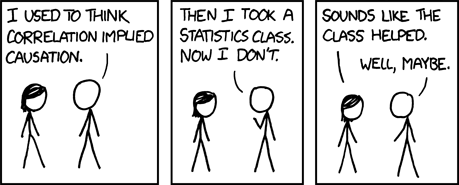 |
| xkcd Comics |
Causation vs. Correlation:
"Costco reported a profit of $537 million last quarter, up from $394 million during the same period last year, according to the Wall Street Journal. The healthy earnings report comes just six days after Jelinik urged lawmakers to raise the minimum wage to $10.10 an hour."
One year of profit reports as opposed to six days following a comment.
Straw Man Fallacy
"Costco makes more than $10,000 in profits per employee, while Walmart takes home about $7,400 per worker, according to the Daily Beast (Walmart and Costco aren’t exactly the same type of business, however)."
Costco (X) makes Profit (a). Walmart (Y) makes Profit (b)
You propose X:Y::a:b, but that is not remotely true.
If X /= Y therefore you cannot make assumption of a=b
source:

Read the Article at HuffingtonPost
Subscribe to:
Posts (Atom)